
Workplace harassment can create emotional stress, damage professional relationships, and affect long-term career opportunities. When inappropriate conduct or discrimination occurs, understanding your legal rights becomes essential. A Sexual harassment lawyer provides professional guidance to help employees navigate complex employment and human rights laws. Since human rights legislation often has greater legal authority than conflicting workplace […]

termination notice in unjust dismissal Canada Termination notice is a fundamental part of employment law that sets out the requirement for employers to inform employees in advance before ending their employment. In the context of What is termination notice in unjust dismissal Canada?, it refers to the legal obligation of an employer to provide written […]
Understanding how fees are structured is an important step before hiring an Employment lawyer Toronto. Legal costs can vary depending on the type of case, complexity, and the lawyer’s experience. Some lawyers charge hourly rates, while others offer contingency fees or fixed rates for specific services. Firms like HTW Law carefully explain all possible costs […]
airline workers entitled to federal severance pay Airline workers in Canada often face uncertainty regarding their rights when it comes to termination and severance benefits. Because airlines are part of an industry that crosses provincial boundaries and involves federal regulation, employees in this sector are generally covered under federal law rather than provincial employment standards. […]
Workplace harassment lawyer successful Many people who experience mistreatment at work often wonder, “What makes a workplace harassment lawyer successful?” Success in this field goes beyond simply knowing the law—it involves a combination of legal expertise, empathy, communication skills, and a strong sense of justice. A successful workplace harassment lawyer is one who understands the […]

On 31 July, the final day of Trinity term, and so of the legal year, there was published by the Investigatory Powers Tribunal an OPEN judgment in a case entitled A Complainant v The Secret Intelligence Service (‘the MI6 case’). In recent years the IPT has become a much more visible contributor to the legal landscape, and […]

On 22 July 2025, the Crown Estate (Wales) Bill passed unopposed through report stage in the House of Lords. The Bill, which seeks to devolve the management of the Crown Estate in Wales, was introduced as a Private Members’ Bill in the Lords by the former leader of Plaid Cymru, Lord Wigley. This is by […]

On 17 August 2023 the Ministry of Defence (MoD) put the Information Commissioner’s Office (ICO) on broad notice about the devastating failure of data protection that is now generally known as the Afghan data breach (although sadly there have been many others). This involved the illegal release of some 33,000 lines of gravely sensitive personal spreadsheet data which put almost 100,000 people – up […]

Introduction In its judgments in Continuity Bill and Treaty Incorporation, the Supreme Court identified what we describe in the first part of this post as the ‘conditioning limitation’. The purpose of that first part was to demonstrate how the conditioning limitation potentially threatens otherwise constitutionally innocuous or unexceptional exercises of devolved legislative power. Although those […]

Introduction On Tuesday last week it emerged that a mind-boggling data breach by the UK government – and the momentous policy decisions taken in its wake – had been kept a secret from all but a handful of people across the three institutions of the state for nearly two years. In a nutshell, in August […]

The Information Commissioner’s Office (ICO) Annual Report for 2024/25 released last week sadly provides evidence of a severe and serious weakening of information rights regulation compared to the strong enforcement which is (and remains) promised especially under the (UK) General Data Protection Regulation (GDPR). Despite even last year’s Report generally revealing formal enforcement such as […]

Introduction The Climate Change Act (Northern Ireland) 2022 (‘CCA’) is, from a constitutional perspective, a fairly unassuming, if far-reaching, exercise of devolved legislative power. It is an example of a devolved part of the UK seizing the opportunity the devolution framework provides to ‘design policies and take public spending decisions that more closely align with […]

On 15th July 2025, the UK Government (UKG) published its response to its review and public consultation on Parts 1 and 2 of the United Kingdom Internal Market Act 2020 (UKIMA). The Response confirms the UKG’s commitment to (re)position the Common Frameworks (sector-specific intergovernmental agreements coordinating policy in devolved areas previously governed by EU law) […]

The ‘Executive Summary’ of the report of Brian Leveson’s Independent Review of the Criminal Courts: Part 1 opens with a description of a crisis. Criminal justice is in crisis. The open caseload in the Crown Court has now reached a record high. As of December 2024, there were over 75,000 outstanding cases in the Crown […]

The UKCLA blog will shortly take its annual summer break, running from Monday 28 July to Monday 1 September. Thank you to all of our authors and readers in the first part of 2025 – we hope you have a great summer, and we look forward to reopening for submissions in September. Se-shauna Wheatle, Paul […]

Despite the Ministry of Justice releasing some helpful but limited data relating to judicial reviews, it is hard to know who wins, and who loses, before the Administrative Court. In an attempt to find out the answer, I designed and populated a dataset covering all reported cases handed down by the Administrative Court in 2024. […]

In a series of posts on this blog, the legal historian Sanjit Nagi has outlined both a history of Labour scepticism about the European Convention of Human Rights (“ECHR”) (and in particular about the role of the European Court of Human Rights (“ECtHR”)) dating back to the Attlee government and a set of theoretical objections […]

How should the state be held to account when it funds and organises essential services—but then denies responsibility for their failure? This post examines that question through the lens of disability-related home adaptations in the UK. It explores how the legal and administrative structures surrounding the Disabled Facilities Grant (DFG) scheme allow local authorities to […]

On 23 June 2025 the Home Secretary, Yvette Cooper, announced in Parliament that she had “decided to proscribe Palestine Action under section 3 of the Terrorism Act 2000.” Section 3 of the 2000 Act gives the Home Secretary the power to proscribe an organisation by laying before Parliament an order to add the organisation to […]
employment lawyer Scarborough specialize in When searching for legal assistance in workplace matters, it’s essential to understand the expertise and focus areas of your legal counsel. An employment lawyer Scarborough often serves clients from a wide range of industries, providing tailored advice and representation to both employees and employers. These professionals play a critical role […]

In September 2024, the Business and Trade Secretary (‘the Secretary of State’)suspended licences authorising the export of items that might be used in carrying out or facilitating Israeli military operations in the Gaza conflict. However, the Secretary of State carved out from that suspension licences for the export of components for F-35 aircraft which could […]

Over the past three decades or so, comparative constitutional law has greatly advanced both as a site of scholarly inquiry and professional practice. As the field’s jurisdictional and thematic focus continues to expand, engagement with comparative constitutional material has become a global phenomenon. This proliferation is manifest in the exponential growth of comparative academic research […]

Over the last few weeks criticism of the European Convention on Human Rights (ECHR/the Convention) and suggestions that the United Kingdom (U.K) should attempt to reform the supranational instrument, and by extension the Human Rights Act 1998 (HRA 1998), have dramatically intensified. Interestingly, calls for reform have not just come from the conservative side of […]

University of Bristol Centre for European and Public Law 18:00-19:30 July 3rd 2025 2.13 Wills Memorial Building, University of Bristol and Online at https://bristol-ac-uk.zoom.us/j/97632863445 The Centre for European and Public Law invites you to join us for the launch of Dr Robert Craig’s new book: Royal Law: Prerogative Foundations. The event will include a brief […]

Bagehot famously made a distinction between the ‘dignified’ and ‘efficient’ parts of the Constitution (Walter Bagehot, The English Constitution (London: Henry S. King and Company 1867)). The former were those which ‘excite and preserve the reverence of the population’, and were epitomised by the grandeur and splendour of the monarchy. The latter were those by […]

More attention has been paid in recent years to the important role government lawyers play in many constitutional systems, and the Janus-faced impact they have on executive authority. On the one hand, it has been pointed out that government lawyers act as a critical source of executive empowerment – by assisting officials as they assert […]

In the summer of 2022, during the election process which Liz Truss would eventually win, Tortoise Media wrote to the Conservative Party’s CEO, Darren Mott, asking nine questions. Considering Tortoise Media had just successfully registered a tortoise called Archie, two overseas nationals, and one fictional person called ‘Margaret Roberts’ to vote for Britain’s next prime […]

The decision of the UK Supreme Court in For Women Scotland Ltd v Scottish Ministers [2025] is one that has generated a rapid response, from the photos of those celebrating the decision on the steps of the UKSC, to the massive wave of protest from trans people and allies. Within the legal world, it has […]

When wealthy landowners, Alexander and Diana Darwall, sued a national park authority to stop people pitching their tents on the Dartmoor Commons, few expected the dispute to take a constitutional turn. Yet this was the outcome of Darwall v Dartmoor National Park Authority[2025] UKSC 20, where the Supreme Court’s decisive rejection of the landowners’ claims […]

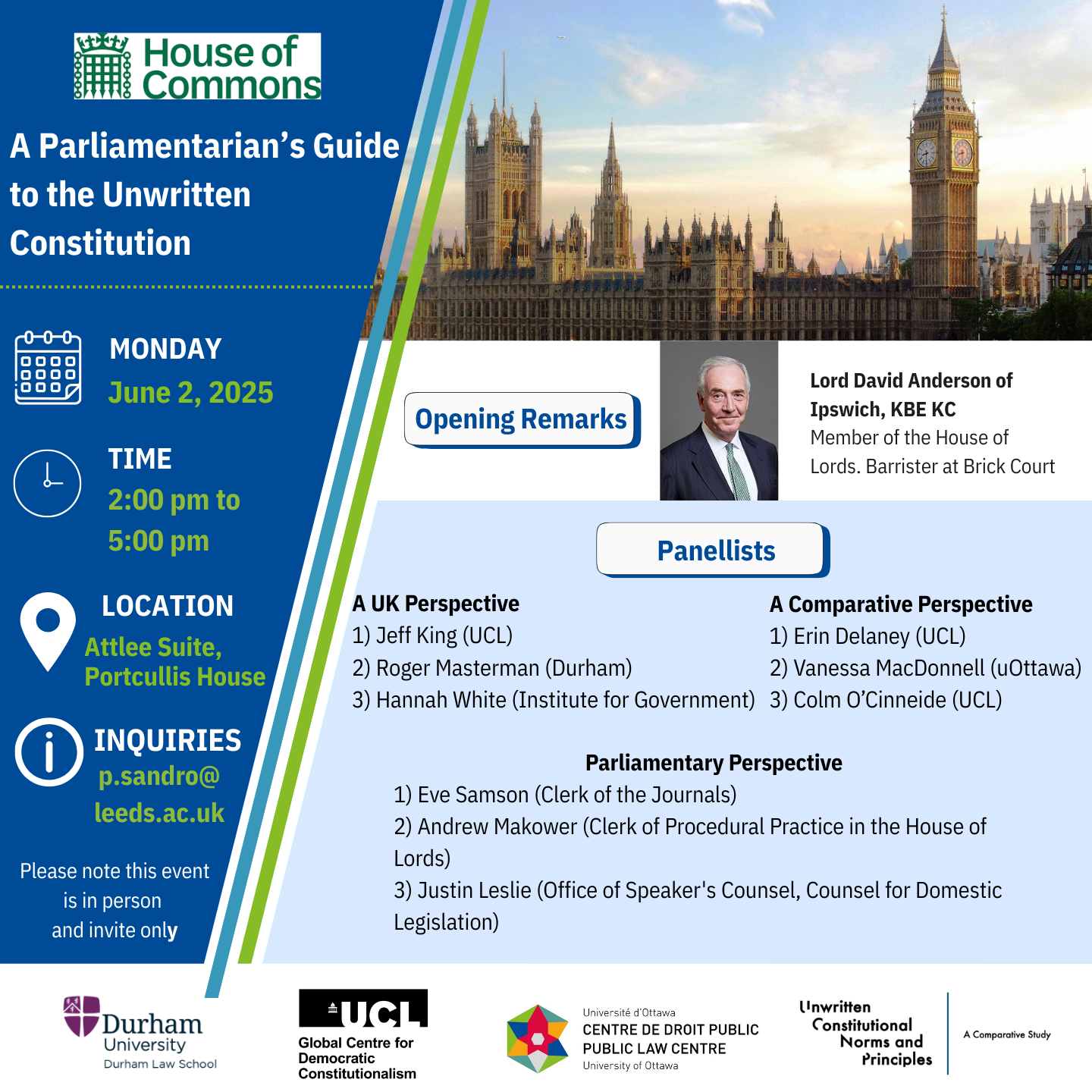

In her excellent and informed critique of the Supreme Court’s judgment in For Women Scotland v The Scottish Ministers [2025] UKSC 16 (“FWS”), Crash Wigley notes that in its judgment the Court neglects to address several important issues, including the human rights consequences of the “biological sex” interpretation favoured by the Court. My own discussion […]

In the United Kingdom, the mental health of politicians has traditionally commanded relatively little attention, perhaps due to popular cynicism and distrust towards elected officials. Still, those involved in UK political life have characterised it as a ‘rough old game’, with MPs referencing broken marriages, overwork, loss of friendships and poor sleep. Over time, MPs […]

In For Women Scotland v The Scottish Ministers the UK Supreme Court rejected the contention that possession of a Gender Recognition Certificate changes an individual’s sex for the purposes of the Equality Act 2010, maintaining equality of status for all those protected under the characteristic of gender reassignment and ensuring that biological women are protected […]

Public authorities are imbued with statutory and prerogative powers. And every now and then, they publish a policy setting out how they will exercise those powers. Policies must not be so rigid that they amount to a fetter on the discretion of decision-makers. But provided there is ample flexibility so as not to fetter, then […]

For Women Scotland v Scottish Ministers [2025] UKSC 16 is a judgment that has triggered great public discussion about the position of trans people in Great Britain (for an interesting discussion of the legal position in Northern Ireland, see Deb et al, “Limits to the UK Supreme Court’s Reach: Northern Ireland, the Windsor Framework and […]

In 2025, we celebrate two anniversaries, the 75th anniversary of the European Convention on Human Rights (ECHR) and the 35th anniversary of the Venice Commission. These significantmilestones will be commemorated by two events over the course of two days, organized bythe Centre for European Law and Internationalisation (CELI, Leicester Law School) and theBingham Centre for […]
In the opening lines of Miller/Cherry, Lady Hale and Lord Reed, giving the unanimous judgment of the court, say that the case ‘arises in circumstances which have never arisen before and are unlikely to ever arise again.’ The case, they said, is a ‘one off.’ [1] One of the arguments raised by the Applicants in […]

The Global South Network (GSN) invites you to attend an online guest lecture titled “Constitutional Supremacy in Southeast Asia: The Case of Malaysia” by the Right Honourable the Chief Justice of Malaysia, Tun Tengku Maimun binti Tuan Mat. The lecture will take place on Friday 23 May 2025, from 9:30 to 10:30 AM (UK time) [17:30 to 18:30 Malaysian […]
Over the last three months, there has been a renewed interest in the concept and politics of ‘Blue Labour’—through media coverage, the formation of a Blue Labour parliamentary group, and the growing prominence of Blue Labour’s founder Lord Maurice Glasman. Blue Labour is somewhat amorphous, in that it tries to reconcile various strands of Labour Party tradition. It […]
top lawyers take to resolve cases When it comes to legal matters, one of the most common questions individuals and businesses have is how long it will take to resolve their cases. The answer is not always straightforward, as the timeline for resolving a case depends on a variety of factors, including the complexity of […]

From Arthur Balfour to Keir Starmer, British political leaders of all stripes have pledged, albeit of varying degrees, overall support for (then, a Jewish homeland and now) Israel. On the 26th January 2024 however, in proceedings brought by South Africa, the International Court of Justice ruled that Israel’s recent military actions in Gaza were plausibly […]

Call for Papers: In the Name of National Security: The Fragility of Human Rights The Centre for Public Law at the University of Cambridge and Universidad Autónoma de Madrid will co-host a workshop In the Name of National Security: The Fragility of Human Rights at the Centro de Estudios Políticos y Constitucionales in Madrid on […]

In an earlier blog post, I noted that we would be waiting with interest to see how the (then newly appointed) Lady Chief Justice of England and Wales (LCJ), Baroness Carr, would use her power, whether statutory or social. This post offers a reflection on two recent public appearances by the LCJ: the LCJ’s Annual Press Conference on […]

Does the judge who hears a case affect the outcome and, particularly, in the U.K.’s top court? This is a question that has received increasing attention of late. In this blog post, I utilise my research on the behind-the-scenes proceedings in the Pinochet case (1998-99) to address this question, stressing the role of the judges’ personal values, […]

School of Law and Social Justice, University of LiverpoolWednesday 23rd April 2025 The Liverpool Public Law Unit (LPLU) is pleased to announce a one-day workshop for PhD candidates and early-career researchers working in constitutional law and theory, and related fields. This workshop will provide an opportunity for participants to present their research, receive constructive feedback […]
severance package review lawyer help with job termination A Severance package review lawyer Vancouver can play a crucial role in assisting employees with job termination by ensuring they receive fair treatment and appropriate compensation. Losing a job can be stressful, and many employees are unsure about their rights and options when faced with termination. Employers […]

Professor Alison Young: ‘Parliament is not sovereign – and it’s a good thing too’ 19th March 2025, 5pm-7pm, University of Essex (in person and online) This exciting event, sponsored by Thomson Reuters and Sweet and Maxwell, who publish the journal Public Law, will delve into the fascinating complexities of constitutional law and the limits of […]

Earlier last month, The Washington Post reported that Apple, a technology company known for emphasizing privacy as one of its key selling points, had been ordered by the U.K. government to create a back door that would enable the retrieval of all content uploaded by any Apple user worldwide to iCloud. iCloud is a cloud storage service that […]


‘THE ROLE OF THE FEDERAL SUPREME COURT IN IRAQ’S DEMOCRATIZATION’ Online Guest Lecture by the President of the Federal Supreme Court of Iraq, Hon. Justice Jassim Muhammad Aboud Hammadi Al-Amiri The Centre for Justice, Law, and Society (CJLS), University of Derby in collaboration with the Global South Network (The University of Derby Chapter), is honoured to host […]

Identifying the rules and practices that should properly be regarded as part of our flexible and uncodified constitution is nowhere more difficult than in relation to the internal workings of the executive. At one time this difficulty was normally attributed to a culture of secrecy within government that kept information about its internal organisation out of […]
lawyer for workplace harassment Determining whether you need a lawyer for workplace harassment depends on several factors, including the severity of the harassment, how your employer has handled your complaints, and whether you have experienced retaliation. Workplace harassment can create a toxic work environment, making it difficult for employees to perform their duties effectively. If […]
Panel Discussion on the ‘Terminally Ill Adults (End of Life) Bill’ 18:00-19:30 Monday 24th February 2025 University of Bristol Law School The University of Bristol’s Centre for European and Public Law and Centre for Health Law and Society invites you to discuss the Terminally Ill Adults (End of Life) Bill. We have assembled an expert […]

The Starmer ministry plans to ‘…deepen our democracy by reforming Parliament…’, but missing from its proposals is any reconsideration of whether Parliament should adopt a role in judicial appointments somewhat analogous to that of the US Senate in federal judicial appointments (US Constitution, Art II, s 2). Debate about such a proposal has recurred from […]

University of Glasgow, August 2025 The European Group of Public Administration has launched its Call for Papers for the 2025 conference ‘EGPA at 50: Prospects for Public Administration across Europe’. The event takes place in Glasgow, 27-29 August 2025. The Law and Administration Stream co-chaired by Polonca Kovač, Krisztina Rozsnyai and Yseult Marique has a […]

The Palace of Westminster is a symbol of British democracy, and it is falling apart. It is a serious danger to those who work within it: a recent news report suggested the Palace could be the next ‘Notre Dame inferno’. For years parliamentarians have repeatedly argued over what to do about this grim state of […]

*Editors’ note – this post is part of a series on ‘The Rule of Guidance?’. The other posts in the series will be available here. Five years on, and with a potential new pandemic on the horizon (if not already here), researchers from all disciplines have been very busy evaluating how the SARS-CoV-2 pandemic was managed […]

Section 179 of the Data Protection Act (DPA) 2018 places the Secretary of State under a duty to ensure that a Report is “la[id] before Parliament” on both the “use” and “effectiveness” of “relevant alternative dispute resolution procedures” in cases involving actual or alleged failures by media organisations, other than broadcasters, “to comply with the […]

The term Private Acts of Parliament (PA) is widely used to include local Acts, that benefit organizations such as local authorities or authorize major infrastructure projects and are often of limited geographical extent, or personal Acts that benefit individuals. This post considers the reasons for the decline in the enaction of Local Acts of Parliament […]

*Editors’ note – this post is part of a series on ‘The Rule of Guidance?’. The other posts in the series will be available here. The distinction between hard and soft law that permeates discussions in international law is often blurry in the realm of domestic administrative law. In international law, soft law is usually understood […]

Keele Law Review The Keele Law Review is pleased to announce a call for submissions for its sixth volume (2025) on the theme of ‘Is Democracy Possible?’ We will accept submissions on any topic relating to the above theme. Deadline for proposals: Monday 14 April 2025. Proposals will be considered on a rolling basis. Proposal […]

Any British citizen that happens to hold citizenship for another country could find themselves in an invidious position. If the Home Secretary decides that it would be ‘conducive to the public good’, they can single-handedly strip a person of their citizenship, and with it, their right to remain in the country. So long as the deprivation […]

*Editors’ note – this post is part of a series on ‘The Rule of Guidance?’. The other posts in the series will be available here. The seemingly ever-growing expanse of “soft-law”, “policy” or “guidance”, (referred to below as “guidance”) has been cautiously welcomed as aiding the business of government and enhancing good public administration. Unsurprisingly, as […]

Elon Musk has recently utilised his extensive platform as owner of social media site X to intervene in British politics. He has labelled the UK Prime Minister ‘two-tier Keir’ in relation to allegations of police bias against white protestors during the 2024 riots, and after the Government announced changes to inheritance tax, declared that ‘Britain […]

*Editors’ note – this post is part of a series on ‘The Rule of Guidance?’. The other posts in the series will be available here. Introduction In March 2020, the government of Ireland and the UK government exercising its responsibility for England, like others across the world, rushed to impose wide-ranging restrictions on many facets of […]

Image: The Conference speakers. Back row, from left to right: Dr Lewis Graham, Dr Chris Monaghan, Prof. Roger Masterman, Dr Matthew Nicholson, Dr Stuart Wallace, Sara Moran, Gabriel Tan, Dr Frederick Cowell, HH Daniel Pearce-Higgins, Dr Erin Ferguson, Dr Tristan Webb. Front row, from left to right: Dr Joanna Bell, Dane Luo, Dr Michael Lane, […]

*Editors’ note – this post is part of a series on ‘The Rule of Guidance?’. The other posts in the series will be available here. The use of law and guidance in a public health emergency was one of the issues explored by the Independent Commission on UK Public Health Emergency Powers. The Commission, chaired by […]

On 23 January, Sir Keir Starmer announced plans to ‘stop blockers getting in the way’ of infrastructure development, by introducing restrictions on judicial review of infrastructure projects. Notwithstanding this government’s consistent commitment to reforming the planning system, so as to galvanise infrastructure and housing delivery, and its forthcoming Planning and Infrastructure Bill, the announcement of […]
*Editors’ note – this post is part of a series on ‘The Rule of Guidance?’. The other posts in the series will be available here. Introduction The conference ‘The Rule of Guidance?’, funded by a Michael Beverley Innovation Fellowship, was held in July 2024 at the Bingham Centre for the Rule of Law in London. The […]

*Editors’ note – this post is part of a series on ‘The Rule of Guidance?’. The other posts in the series will be available here. Across 2020 and 2021, the UK government introduced a large number of policies, rules, and guidance for the public in response to the Covid-19 pandemic. Most of these sought to limit […]
Severance Pay Calculator Show the Gross Or Net Payment Amount When an employee is laid off or fired, they may be entitled to compensation under the Employment Standards Act (ESA). This is referred to as severance pay and may include a lump sum payment or periodic payments. Some companies offer severance packages to help their […]

The Supreme Court will hear the appeal in R (Jwanczuk) v Secretary of State for Work and Pensions (UKSC/2023/0152) on 11 and 12 March 2025. One of the issues is the circumstances in which courts in England and Wales may depart from decisions of appellate courts in Northern Ireland and Scotland regarding laws of inter-jurisdictional […]
Occupation Orders Be Used in Cases The Family Law Act 1996 allows for occupation orders which are used to determine who lives in a property and who pays the mortgage or rent on it. These are usually used in cases involving children as they aim to maintain stability and continuity for the child and to […]

Among the many questions raised by the resignation of the Archbishop of Canterbury in November 2024, the peerage which has customarily been awarded by the Prime Minister hangs in the balance. The Prime Minister enjoys an unlimited discretion to appoint new peers, and since the Life Peerages Act 1958 has granted a life peerage on […]

In a recent Administrative Court decision, the Secretary of State for the Home Department was found to be in breach of the Public Sector Equality Duty (the “PSED”), contained in s.149 of the Equality Act 2010, due to failing to collect and monitor statistical equality data relating to the provision of asylum accommodation to vulnerable […]

It is a well-understood principle that a judicial review court traditionally forbears from granting coercive orders against public authorities on grounds of mutual institutional trust, and constitutional reasons relating to the separation of powers. This is particularly so in the case of mandatory orders: whilst section 31(1) of the Senior Courts Act 1981 allows judges to grant […]

Call for Guest Editors of Public Law’s Annual Themed Analysis Section (2026): The Editorial Committee of Public Law invites Guest Editors to submit proposals for a themed set of ‘Analysis’ papers to be published in the April 2026 issue of the journal. This set of papers will follow publication of the papers on ‘Government Outsourcing […]

This is a reminder that the UKCLA Annual General Meeting will be held in person at 1.30pm on Wednesday 8th January 2025 in the Keeton Room, Bentham House, University College London, 4-8 Endsleigh Gardens, London, WC1H OEG. The AGM is open to all paid up members of the UKCLA. All UKCLA members are invited to […]

8th January 2025 The UKCLA Annual General Meeting will be held in person at 1.30pm on Wednesday 8th January 2025 in the Keeton Room, Bentham House, University College London, 4-8 Endsleigh Gardens, London, WC1H OEG. The AGM is open to all paid up members of the UKCLA. All UKCLA members are invited to an in […]
most common forms of workplace harassment Workplace harassment is a common and often insidious problem. When it goes unaddressed, it can damage employee morale and create a hostile working environment. As a result, it’s essential that all managers and employees understand what constitutes workplace harassment in order to prevent it. The most common forms of […]
2024 was billed to be the year of the first ‘robust and comprehensive’ UK statutory review of the extent of journalism’s compliance with data protection law and good practice, a formal appraisal which was (and is) meant to become a clear ‘part of the media landscape’ as reformed by the Data Protection Act (DPA) 2018 in the wake of the general/first […]
One aspect of the recent debates surrounding the Terminally Ill Adults (End of Life) Bill moved by Kim Leadbeater MP was the criticism expressed of the Bill’s drafting – that is, the actual text of the Bill’s provisions as distinct from their underlying policy objectives or purposes. The concerns with this language were largely put to bed when it emerged that […]

The UKCLA blog will be taking a break over the Christmas period – the blog will be closed from Thursday 19th December 2024 and will re-open on Monday 6th January 2025. Any final posts would need to be submitted for consideration by Tuesday 17th December for us to be able to publish them before the break. […]

On 6th November, Prime Minister Keir Starmer published his (long awaited) revised version of the Ministerial Code. A written statement in Parliament by the Chancellor of the Duchy of Lancaster, Pat McFadden, accompanying the release of the updated text suggested that ‘[t]he new code will be instrumental in setting out the high standards that the […]
One of the best lessons I was given by my pupil supervisors in drafting written submissions was to go back and review the use of every adjective. As they pointed out, there is always a temptation in written advocacy to use excited adjectives, but the cumulative effect often makes the submission less, rather than more, […]
The recent protests by farmers over changes to the rules on inheritance tax have raised questions over who, if anyone, should be exempt from paying it – including King Charles, as an episode of Newsnight has recently highlighted. Most people in the UK pay 40% inheritance tax on anything they inherit over a £325,000 threshold. […]

The question of separating constitutional powers in Jersey is more complex than it appears. Here’s why. Jersey and Guernsey are unique globally in having constitutions that in the ancient office of Bailiff fuse together the roles of chief justice and presiding officer of their respective courts and parliaments. As I argue, this is further complicated […]

With the second reading of Kim Leadbeater’s Terminally Ill Adults (End of Life) Bill fast approaching, debate persists as to whether limiting eligibility to terminally ill adults could be successfully challenged as discriminatory under Article 14 of the European Convention on Human Rights (ECHR) before the domestic courts and/or the European Court of Human Rights […]
There is a good reason why the constitutional convention requiring the monarch to exercise his prerogative powers on the advice of his government is known as the ‘Cardinal Convention’: it is ‘the most fundamental’ constitutional convention relating to the monarchy – something King Charles is finding out when it comes to slavery reparations. At a […]

My recent post on Kim Leadbeater’s Terminally Ill Adults (End of Life) Bill, which seeks to legalise assisted suicide for terminally ill adults and so modify the blanket ban provided by s. 2 of the Suicide Act 1961, has attracted some attention. There I raised questions as to the compatibility of the Bill with articles […]

Sometimes we are so focused on big changes that we miss the mundane ones. But we shouldn’t. Sometimes a mundane change can tell us something about the character of a set of arrangements. The new UK Government has just issued a new version of the Ministerial Code (‘the Code’). The Code has a quasi-constitutional status, serving partly as an ethics code […]

This article suggests that the Supreme Court’s interpretation of section 28(7) has created such problems in relation to the legislative competence of the Scottish Parliament that the provision needs to be amended, repealed or qualified. Text The terms of section 28(7) appear innocuous. Section 28(1) confers power on the Scottish Parliament to make laws to […]
The introduction of Kim Leadbeater’s Private Member’s Bill which will, if enacted, legalise assisted suicide for ‘Terminally Ill Adults’ in England and Wales has, unsurprisingly, drawn significant commentary from many quarters, including some legal academics and practitioners. This is despite the fact that, as yet, Leadbeater’s Bill has not been published. Debates on assisted dying […]
On 28 October 2024, the Court of Appeal handed down its eagerly-awaited judgment in Oakley and Sneddon v Secretary of State for Justice, concerning the proper approach to cases where the Secretary of State rejects advice from the Parole Board to transfer prisoners to open prison conditions. As the Court recognised, there has recently been an “accretion of […]

Thursday 12th December 2024 – Zoom Webinar The Law School at the University of Essex, in collaboration with the Constitutional and Administrative Justice Initiative (CAJI) is looking forward to welcoming you to our online event: ‘Let’s Talk Everything PhD’. This event is designed for anyone who is thinking about applying for a PhD in the […]
Kim Leadbeater has recently introduced a Private Member’s Bill in the House of Commons which seeks to legalise assisted suicide for the terminally ill. Despite its second reading being scheduled for 29 November, the text of the Bill is, somewhat remarkably given its significance, still to be published. Yet the outline of Leadbeater’s proposals has […]

In Secretary of State for Business and Trade v Mercer [2024] UKSC 12 (Mercer), the Supreme Court was confronted with whether and how to exercise its powers under sections 3 and 4 of the HRA 1998. This blog post will focus on assessing how the Supreme Court approached the judicial discretion to grant a declaration […]
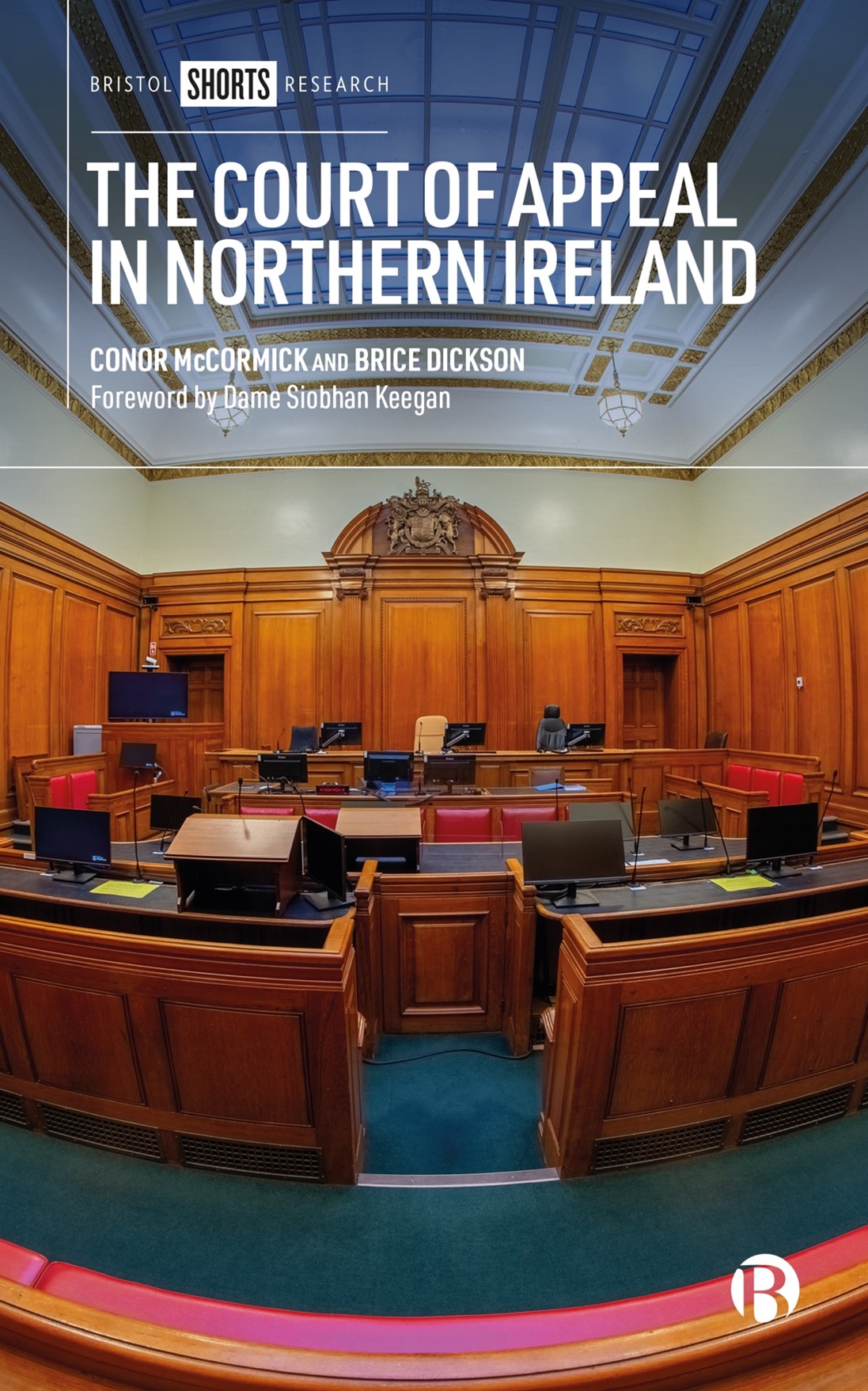
Monday 18 November, 5pm – Inn of Court, Royal Courts of Justice, Belfast Members of the UK Constitutional Law Association are warmly invited to attend the launch of a new book on The Court of Appeal in Northern Ireland by Dr Conor McCormick and and Prof Emeritus Brice Dickson. The book will be launched in […]

The UK Labour Government is committed to resetting relations with the devolved institutions. Yet, in its manifesto, Labour made no mention of any plans to reform the United Kingdom Internal Market Act 2020 (UKIMA) – regulating intra-UK trade post-Brexit – to deliver that commitment. In government, Labour now appears reluctant to engage directly with the Act, preferring […]

A hybrid guest lecture by the President of the UK Supreme Court/the Judicial Committee of the Privy Council, Lord Reed of Allermuir. Part of the Judges Guest Lecture Series organised by the Global South Network (GSN). Monday 20 January 2025 at the University of Leicester, UK. The Global South Network is honoured to have President […]

In 2018, Sir Ernest Ryder warned that the future shift to online dispute resolution for most, and in some areas all disputes, risks eroding judicial accountability and fostering a democratic deficit. The pandemic, the £1.3 billion court modernisation program and six years later, the future of resolving the majority of disputes online appears to be […]

With the upcoming presidential elections in the United States, fears that Donald Trump may return to the White House have reinforced the ongoing academic debate about the possible dangers of populism. Given the enormous amount of scholarly literature on the topic, however, it may not always be clear what the distinctive contribution of constitutional lawyers and theorists may […]

Over the past decade the House of Lords Constitution Committee has immersed itself in the principles, purposes and operation of devolution. Last week marked 10 years since the referendum on Scottish independence, and in that time the Committee has published multiple reports on the changing face of the territorial constitution, offering encouragement, detailed critique and […]

Tuesday, 1 October 2024, 5:30 PM – 7:30 PM The Schools of Law at Queen Mary University of London and at the University of Edinburgh are delighted to co-host an online symposium of Professor Sionaidh Douglas-Scott’s new book: Brexit, Union, and Disunion (cambridge.org). The panel of commentators are: The event will be chaired by Professor […]

On 4 September 2024, the UK Government published the Product Regulation and Metrology Bill (the PRMB). Introduced in the Lords, the PRMB is certainly not the most headline-grabbing Bill announced in the King’s Speech. Its substance – product standards and weights and measures – is important, but unlikely to excite the masses. However, as the […]

Constitution-making has been part of political life since the 18th century. Today it is no longer a royal exercise to be completed by a stroke of pen. It is touted as a foundational political act in a nation’s quest for a new political life. It is an enterprise that looks to a set of techniques for its success. As countries around the globe set out on […]

The Queen Mary Centre of Law and Society in a Global Context (CLSGC) is thrilled to announce a Masterclass with Professor Philipp Dann (Humboldt-Universität zu Berlin) that will take place on 14-16 January 2025. The legacies of empire and colonialism are becoming visible everywhere these days. They shape various debates in public law but also indicate a […]

In popular consciousness, archivists (when noticed at all, and not confused with Indiana Jones) are usually otherworldly, whey-faced individuals poring shortsightedly over mediaeval tomes, their institutional domains obscure, dusty spaces with little connection to the ‘real world.’ The central role of archives as repositories for important legal records is thereby often overlooked, but this function […]
wrongful dismissal happen due to changes in work location The term wrongful dismissal is often used in relation to a firing that is illegal, unfair or against the employee’s rights. However, it’s also possible to be wrongfully terminated without being fired. In this blog post, our Toronto wrongful dismissal lawyer explores how that can happen, […]
The Labour Government comes into office seeking to indicate, as a priority, that it is making a break from its predecessors. That much is central to a manifesto simply entitled Change. Prominent within this agenda is an effort to reset relations with the Irish Government and attempt to restore a partnership around Northern Ireland affairs. This […]

“The Supreme Court’s Practice in Cases Related to the War in Ukraine“ ONLINE GUEST LECTURE BY JUDGE DR VITALIY URKEVYCH, SECRETARY OF THE GRAND CHAMBER OF THE SUPREME COURT OF UKRAINE 6 SEPTEMBER 2024 16:00 UK time / 14:00 UKRAINE time THE GLOBAL SOUTH NETWORK JUDGES GUEST LECTURE SERIES Judge Dr Vitaliy Urkevych, Secretary of the […]

The King’s Speech on 17 July outlined the newly elected Labour government’s plans for the United Kingdom, including 39 Bills that it intends to introduce in this parliamentary session. Among these are included ambitious plans for the re-nationalisation of passenger railway services, the establishment of a publicly owned clean power company, and special measures to […]


The UKCLA blog will shortly take its annual summer break, running from Monday 29th July to Monday 2nd September. Thank you to all of our authors and readers in the first part of 2024 – we hope you have a great summer, and we look forward to reopening for submissions in September. Se-shauna Wheatle, Paul […]
The recent general election saw the Labour Party being elected with a majority of 171 seats in Parliament. The following morning, in his first speech as Prime Minister, Sir Keir Starmer claimed the nation had given the Labour Party a “clear mandate”. Similarly, the new Chancellor of the Exchequer, Rachel Reeves, stated the British people […]

Barely 24 hours after Labour’s victory at the polls, Prime Minister Keir Starmer’s top team of MPs began to line the path to No. 10 Downing Street, hoping to have their shadow portfolios translated into long-awaited ministerial roles. First among the parade of MPs was Angela Rayner, who was appointed Secretary of State for Housing, […]

Shortly before the July 2024 general election was called, the Conservative Government published a White Paper on its approach to regulatory reform. Intended to ensure the UK’s regulatory landscape delivered “a world-class service”, Smarter Regulation: Delivering a Regulatory Environment for Innovation, Investment and Growth included a number of proposals to streamline regulation, including a one-stop […]
It is not that often that first instance judges in judicial review claims disagree as to the approach to be taken in the context of a core question relating to judicial review. When it happens, administrative lawyers are bound to take notice. This has most recently occurred in the context of rationality challenges to decisions […]

On 5 June 2024, the Administrative Court gave its final word on relief in the (relatively) long running ECPAT UK judicial review (see R (ECPAT UK) v Kent County Council [2024] EWHC 1353 (Admin)). The case centred on Kent County Council’s (‘KCC’) failure to meet its statutory duty to look after unaccompanied asylum-seeking children (‘UAS […]

“BEING A JUDGE IN ISRAEL; TAKING JUDGING SERIOUSLY”: ONLINE GUEST LECTURE BY JUSTICE RUTH RONNEN, THE SUPREME COURT OF ISRAEL PART OF THE GLOBAL SOUTH NETWORK JUDGES GUEST LECTURE SERIES 25 AUGUST 2024, 10:00 am UK time/12:00pm Israel time Previously, the Global South Network invited all to attend the guest talk of Honourable Justice Ali […]

Far from being settled, after Brexit the debates around the place of the UK in Europe continue to be a central aspect of British politics. They remain so ahead of the 2024 general election. The question of the application in the UK of the European Convention on Human Rights seems to be a central point […]

The Liberal Democrat, Conservative and Labour manifestos offer markedly different visions for the future of devolution in Scotland, Wales and Northern Ireland after the 2024 UK General Election . At one extreme, the Liberal Democrats offer fundamental constitutional reform. If elected, they have promised to ‘transfer greater powers away from Westminster and Whitehall’ by ‘[strengthening] the voices of England, Wales, Scotland […]

If an application for asylum is refused, the applicant can appeal to the First-tier Tribunal. The latest tribunal statistics show a sharp increase in the number of asylum appeals lodged in the tribunal. In the year 2023/2024, there were 29,172 appeals lodged, which can be compared to 8,019 appeals lodged during the previous year—a 264% […]

Friday 8th November 2024, 10:00am – 17:00pm, University of Worcester (in-person) A conference hosted by the University of Worcester School of Law and the Constitutions, Rights and Justice Research Group, in association with the UK Constitutional Law Association Keynote: Prof. Satvinder Juss, Barrister and Professor of Law, The Dickinson Poon School of Law, King’s College […]
Effects of a Constructive Dismissal When an employer dismisses an employee without sending them a formal termination notice, this is known as a constructive dismissal. Understanding the effects of a constructive dismissal can help employees understand their options, including filing a claim for wrongful termination. A constructive dismissal occurs when your employer makes a significant […]
On 11 June 2024, the Grand Chamber of the European Court of Human Rights handed down its judgment in Nealon and Hallam v United Kingdom. The case is important for two reasons: firstly, because it provides a long-awaited clarification of the law relating to the presumption of innocence under Article 6 of the Convention; secondly, […]
For the first time, by way of the Post Office (Horizon System) Offences Act (“the Act”), Parliament has legislated to quash criminal convictions. In this post I will argue that, no matter how understandable, indeed laudable, the intention behind this legislation, in its haste to offer a speedy and comprehensive correction to mass injustice, Parliament has crossed […]

Introduction Recently Texas governor Gregg Abbott openly defied the federal government over migration control. Echoing ‘the secessionist rhetoric’ of the Confederacy and Civil War Era, he claimed that the federal government ‘has broken the compact between the United States and the States’. This incident not only brings to light Texas’s various secessionist movements, such as […]

*Editors’ Note: This post is part of the ‘Unwritten Constitutional Norms and Principles Blog Series’* Unwritten constitutional principles supply much of the foundation – or ‘hidden wiring’ – of the UK constitution. As Lord Reed has recently recognised, the constitution relies on numerous ‘understandings, generally tacit, about how power should be exercised’. Constitutional form and […]

*Editors’ Note: This post is part of the ‘Unwritten Constitutional Norms and Principles Blog Series’* Throughout the life of devolution, the courts appear to have diverged on how to properly determine the scope and limits of devolved lawmaking power, and the extent to which norms and principles not expressly contained in the text of the […]

On 13 May 2024, Humphreys J in the Northern Ireland High Court delivered his judgment in The matter of Northern Ireland Human Rights Commission, JR295 and the Illegal Migration Act 2023 [2024] NIKB 35. The case dealt with the impact of the Withdrawal Agreement and the Windsor Framework. Re NIHRC had the effect of disapplying […]

*Editors’ Note: This post is part of the ‘Unwritten Constitutional Norms and Principles Blog Series’* It remains commonplace, both in political and public law discourse, to describe the Royal Prerogative as archaic or anachronistic. Executive power in the United Kingdom may begin with the Crown, but even the most venerated constitutional historians have long thought ‘the Crown’ is a convenient […]

*Editors’ note: This post is part of a series on ‘the Unwritten Constitutional Norms and Principles’* Constitutional structures generally leave space for institutional innovations that can enhance the democratic process. One such innovation, embraced by a variety of countries around the world, is the deliberative minipublic. Experimentation with incorporating deliberative minipublics into the modern democratic process began […]

Introduction Who gets to interpret and articulate unwritten constitutional principles (UCPs) or constitutional silences? In answering that question, we often assume that the key institutional actors are either the courts and Parliament (or both, depending on one’s position). However, such assumptions often lead us to exclude both the role of the executive and ordinary citizens […]

In 2021 the then Lord Chancellor Robert Buckland QC MP cited the principle of legality as an example of an aspect of public law that might ‘take on a life of [its] own, and lead to the courts overreaching.’ In the simplest terms, the principle of legality is a common law rule of statutory interpretation […]

Unwritten constitutionalism is often associated with Westminster systems, but it is arguably a feature of all constitutional democracies, including jurisdictions with highly codified constitutions. The ‘unwritten’ facets of the constitution encompass a range of constitutional norms and principles that do not derive their validity from texts authorized through a formal institutional process. The unwritten rules […]

In one of the most celebrated passages in legal history, Lord Atkin stated in Liversidge v Anderson [1942] AC 206 that whether in war or in peace, the laws speak in the same voice and that the judges, “stand between the subject and any attempted encroachments on his liberty by the executive, alert to see that any […]

Human rights in the UK are routinely reviewed by various UN bodies – treaty bodies, special procedures, and the Universal Periodic Review (UPR). The influence of these activities in the UK has been the subject of some inquiry in the past (see, notably, Brice Dickson’s recent book on the subject). But what has remained elusive […]

University of Bristol Law School, 1 July 2024 We are excited to announce a one-day workshop for PhD candidates and early-career academics whose research interests fall broadly within constitutional law and theory. The workshop will allow PhD candidates and early-career scholars to present their research, receive constructive feedback from established scholars and network with other […]

Commentary on the Safety of Rwanda (Asylum and Immigration) Act (“RA”), which is shortly to receive Royal Assent, has concentrated principally on its deeming of Rwanda as a safe country whilst ousting the supervision of courts. This post considers a separate issue – section 4 of the Act as it applies to victims of slavery […]

Following pressure from the in-coming Blair government, in the late 1990s the three Crown Dependencies enacted legislation modelled closely on the UK Human Rights Act 1998 – in Jersey, the Human Rights (Jersey) Law 2000. The States Assembly passed the 2000 Law with little controversy, 49 States members voting pour and only one contre. It […]

SLS Sponsored Collaborative Workshop for PhD Candidates and Early Career Academics in Public Law, Labour Law, Migration & Asylum, and Human Rights Durham, 20 June 2024 We are pleased to announce a collaborative one-day workshop for PhD candidates and early career academics to be held on 20 June 2024 at Durham University. The workshop is […]

The Investigatory Powers (Amendment) Bill was introduced into Parliament before Christmas, starting in the House of Lords, to which it will shortly return for consideration of Commons amendments. Generally, the progress of the Bill, much of which implements recommendations made by Lord Anderson of Ipswich in his review of the Investigatory Powers Act 2016 of June 2023, […]

The Work and Pensions Committee is conducting an inquiry on a highly important matter: how vulnerable welfare claimants are safeguarded by the Department of Work and Pensions (DWP), and whether changes ought to be made. In the course of this work, it has raised this important question: should the DWP be placed under a statutory […]

As it becomes clear the Labour Party is on course to win the next general election, greater attention is being paid to their intended programme for government. Despite the current leadership disowning policies from the 2017 and 2019 manifesto, the Labour Party remains committed to expropriation in a limited number of areas: renationalising the railways, publicly […]

Constitutionalism Beyond the State and the Role of Domestic Constitutional Courts 30-31 May 2024, WZB Berlin Social Science Centre Almost fifty years have passed since the German Federal Constitutional Court rendered one of its most widely discussed and influential decisions: Solange I. On May 29, 1974, the Court famously held that it would review European Community […]

The Editorial Committee of Public Law invites Guest Editors to submit proposals for a themed set of ‘Analysis’ papers to be published in the April 2025 issue of the journal. This set of papers will follow publication—in April 2023—of the papers on ‘Government Outsourcing in the Modern Administrative State’ (curated by Joe Tomlinson (York) and Janina Boughey […]

How should the Centre of government (i.e., No 10 and the Cabinet Office) organise itself so that it is effective and ensures effective government more generally? A recent report, Power with Purpose (PWP), by the Commission for the Centre of Government under the auspices of the Institute for Government, reminds us of the difficulties of managing and […]

The myriad problems with the Safety of Rwanda (Asylum and Immigration) Bill, as well as the policy that the Bill is supposed to facilitate, have been clearly documented. One common criticism is that the Bill would precipitate a ‘constitutional crisis’ by provoking the courts into refusing to recognise its legal effect. Adam Tucker argues that the Bill’s most problematic sections could […]

In November 2023, the Supreme Court of the UK dealt a critical blow to the government’s proposal to send certain asylum seekers to the Republic of Rwanda. In AAA and Others v the Home Secretary, the Court ruled that removal to Rwanda would be unlawful because that country was not, at the time, a ‘safe country’. The government […]

Joanna Cherry KC MP has suggested (here and in parliament), somewhat indirectly, that the nobile officium of the Court of Session might, insofar as it “exists to give remedies where there would otherwise be none”, be exercised to limit the effect of the provisions of the Safety of Rwanda (Asylum and Immigration) Bill 2023-24. Notably, […]

This is a call for women to be involved in the creation of a Women in UK Public Law Group, which will be an inclusive and intersectional network to facilitate mutual support among women in the field of UK public law. We are open to researchers and practitioners (including NGOs, the public sector and beyond) at any stage of their careers. The group will work to bring together women working in this field, to provide academic support and mentorship, […]

On the fourth of February, Nationalists and Unionists agreed to form a new government in Northern Ireland. For five of the seven years since 2017 Northern Ireland has been governed without ministers. Without political decision-makers, civil servants could only work within the lines of existing policy. This had stark consequences for people in Northern Ireland. On […]

*Editors’ note – this post is part of a series on ‘Contemporary Challenges for Constitutional Accountability’. The other posts in the series will be available here.* From the rise of so-called ‘illiberal democracies’ following the fall of the Berlin Wall, through the hasty jettisoning of human rights by democracies in the aftermath of 9/11, to the […]


In a recent comment on the Government’s Rwanda Bill and on speculations about an unprecedented strike down by the Supreme Court, Professor Mark Elliott asked a question that has been on many UK public lawyers’ minds lately: “Are we headed for a constitutional crisis?” This question, to be sure, is not new. However, with a […]

***** Constitutional Reform in the UK: A Conference on the Brown Commission Report (Part Two) 1 March 2024 | 09.00 – 17.00 British Institute of International and Comparative Law, Charles Clore House, 17 Russell Square London WC1B 5JP At the end of 2022, the Brown Commission published its final report, ‘A New Britain: Renewing our Democracy and Rebuilding […]

International Society of Public Law British-Irish Chapter CALL FOR PAPERS AND PANELS: TECHNIQUES OF CONSTITUTIONAL REGULATION London School of Economics 20-21 May 2024 The constitutional upheavals affecting the United Kingdom and Ireland in recent years have led to questioning of the effectiveness of traditional techniques of constitutional regulation, as well as of the security and […]

The upheaval of the UK constitution from 2016 onwards has been associated with a host of individuals, from David Cameron to Boris Johnson to Dominic Cummings, who have received the significant bulk of academic attention in recent years. And yet, another individual has had a substantial impact upon the UK constitution during this time: Nigel […]
Lawyer Handles Wrongful Dismissal When an employee believes they were wrongfully fired from their job, it is important to consult with a lawyer as soon as possible. A NYC wrongful dismissal lawyer could provide advice on the legal process and help the client determine if their firing violated employment laws. It is also helpful to […]

*Editors’ note – this post is part of a series on ‘Contemporary Challenges for Constitutional Accountability’. The other posts in the series will be available here.* It is difficult to provide a satisfying account of constitutional accountability in the UK without considering the internal processes of major political parties (especially the governing party and the largest opposition […]

The recently announced plan to increase the minimum income requirement (MIR) to £38,700 led to widespread criticism, with the government appearing to exclude all but the affluent from establishing family life in the UK. This has led to a partial policy shift, with it now announced that the threshold to sponsor a spouse will not rise to […]

Successive UK Governments have promised to regulate less, better or smarter to promote economic growth and competitiveness while protecting consumers, workers and the environment. Relatively low visibility reviews and reports – recast and relaunched over time – have belied the public politics of ‘burning red tape’. But as the fireworks faded over Westminster as 2024 […]

The Safety of Rwanda (Asylum and Immigration) Bill will receive its second reading in the House of Lords on 29 January 2024, having cleared the House of Commons unamended. There are a great many problems with the Rwanda Bill, any of which might weigh with the Lords, but this blog post focuses on just one: […]

Launch Event – University of Bristol Law School’s Centre for European and Public Law, 30th January 2024 The University of Bristol Law School is delighted to invite you to the Centre for European and Public Law (CEPL) launch event. We will start the term with a discussion on the Government’s controversial Safety of Rwanda (Asylum […]

Parliamentary Academic Fellowships in Constitutional Law and Lobbying and Ethics The UK Parliament has just launched the recruitment of two Parliamentary Academic Fellows. This Scheme gives university-based researchers and staff working in knowledge exchange the opportunity to participate in a fellowship project with an office in Parliament. The first is a Constitutional Law Fellowship. The […]

Some commentators have claimed that the decision to expedite the process of formally exonerating the sub-postmasters potentially runs afoul of certain core constitutional principles, in particular the separation of powers. It has also been claimed that the ‘crown does not have a prerogative of justice but only a prerogative of mercy’. This blog considers and challenges those claims. Technically, […]
Last year’s Supreme Court decision in R (AAA) v Home Secretary – which found the British government’s Rwanda policy to be unlawful – has reignited broader debates about the position of a government which commands a majority in Parliament vis a vis the judiciary, the separation of powers, the extent to which legislating against judicial […]

Münster Conference on Future-Proofing in Public Law – Call for Abstracts The Faculty of Law at the University of Münster invites you to the Second Münster Conference on Public International and Comparative Law to be held from 19 to 21 September 2024 at the Institute for International and Comparative Public Law in Münster, Germany. Organisers: […]

This is a reminder that the UKCLA Annual General Meeting will be held in person at 1.30pm on the 10th of January 2024 in the Keeton Room, Bentham House, University College London, 4-8 Endsleigh Gardens, London, WC1H OEG. The AGM is open to all paid up members of the UKCLA. All UKCLA members are invited to an in […]

At the beginning of the year, this blog covered the report from the House of Lords Constitution Committee into the Lord Chancellor and the Law Officers, with Conor Casey’s post focusing in particular on the latter. This post aims to ensure that 2023 is bookended by consideration of the issues addressed in the committee’s report – and […]

“Public inquiries are one of Britain’s only growth industries,” the Financial Times has suggested recently. Research from the Institute for Government demonstrates that there were 69 public inquiries launched between 1990 and 2017, compared with 19 in the previous 30 years. Several high-profile public inquiries are open at time of writing, including the Grenfell Inquiry, the Covid-19 Inquiry, and the Post […]

Michael Foran has eloquently defended on this blog the decision by Lady Haldane in Re Scottish Minister’s Petition 2023 CSOH 89 which found the Secretary of State for Scotland’s maiden exercise of the power contained in s.35 of the Scotland Act lawful. I will not repeat here the discussion of the particulars of the case, nor the precise step-by-step illustration of […]

With the year drawing to a close, time is running out in which to join the UK Constitutional Law Association (UKCLA) as a member for 2023 or to renew membership for that year. The UKCLA relies on, and greatly appreciates, the generous support of its members. Details about how to join or renew are available […]

10th January 2024 The UKCLA Annual General Meeting will be held in person at 1.30pm on the 10th of January 2024 in the Keeton Room, Bentham House, University College London, 4-8 Endsleigh Gardens, London, WC1H OEG. The AGM is open to all paid up members of the UKCLA. All UKCLA members are invited to an in person Round Table conference following […]

University of Portsmouth, 26-28 March 2024 STREAM: CONSTITUTIONALISM IN DEVELOPING DEMOCRACIES CALL FOR PAPERS Stable constitutionalism is generally regarded as one of the characteristics associated with advanced democracies.However, emerging research in comparative law and courts suggests that a significant degree of constitutionalism can exist without having an established democracy. Admittedly, many developing democracies have unstable […]

Wednesday 10 April 2024, Liverpool Law School, University of Liverpool More than 25 years after the conclusion of the 1998 Belfast/Good Friday Agreement, the continued instability of devolved government in Northern Ireland has seen increased calls for reform of the institutions created by the 1998 Agreement. Most recently, a November 2023 report by the House […]

The UKCLA blog will be taking a break over the Christmas period – the blog will be closed from Thursday 21st December 2023 and will re-open on Monday 8th January 2024. We’d like to thank everyone who has contributed a post this year for their support for the UKCLA blog, everyone who reads and engages […]

At the outset of their judgment for the Supreme Court in R (Miller) v Prime Minister [2019] UKSC 41, [2020] AC 373 (a.k.a. Miller No. 2), Lady Hale and Lord Reed sought to reassure those who might be nervous about its implications: the case, they said, ‘arises in circumstances which have never arisen before and are unlikely ever to […]

This week, the Inner House of the Court of Session delivered judgment in Re Scottish Minister’s Petition 2023 CSOH 89. The case concerned the lawfulness of an Order made under section 35 of the Scotland Act 1998 to prevent the Gender Recognition Reform (Scotland) Bill from receiving Royal Assent. I wrote about this possibility at […]

Virtual Symposium on “Constitutional Essentials” by Frank Michelman, Friday 15th December 2023, 1.30pm The Constitutional and Administrative Justice Initiative at the University of Essex is kindly supporting a Virtual Symposium on Professor Frank Michelman’s latest book, “Constitutional Essentials: On the Constitutional Theory of Political Liberalism” (OUP 2022), on 15 December at 13.30 UK time (08.30 EST) […]

The Safety of Rwanda (Asylum and Immigration) Bill was introduced into Parliament on 7 December 2023. According to its long title, its purpose is to facilitate “the removal of certain migrants” to Rwanda. Without even looking at the international law dimensions, the Bill contains constitutionally troubling provisions. Firstly, it purports to legislatively state “facts”. Secondly, it usurps the judicial function by purporting […]

Brexit has been and continues to be a complicated process to understand, especially for continental lawyers. Nevertheless, it is interesting to try to study its dynamics and how, if at all, the law implemented within more than four decades of being part of the European Union will continue to affect the British legal system. In […]

In the summer I wrote on this blog about the Administrative Court’s decision in R (Oceana) v Upper Tribunal [2023] EWHC 791 (Admin). Oceana was the first time the new ‘super ouster clause’ contained in section 11A of the Tribunals, Courts and Enforcement Act 2007 (‘TCEA 2007’), introduced by section 2 of the Judicial Review and Courts Act 2022, fell for judicial consideration, and […]

On 15 November, the Supreme Court issued its much-awaited judgment in the case of AAA and others v the Home Secretary, commonly referred to as the Rwanda asylum policy case. The decision came notably quickly, almost a month after the case was heard, indicating the Court’s responsiveness to the urgency and the wider public interest surrounding the case. […]

Last week the Supreme Court (in R (AAA) v Home Secretary) found the UK government’s policy to send asylum applicants to Rwanda unlawful on the grounds that “removal … to Rwanda would expose them to a real risk of ill-treatment by reason of refoulement” [149]. In response, the Prime Minister announced that the government intends […]

*Editors’ note – this post is part of a series on ‘Contemporary Challenges for Constitutional Accountability’. The other posts in the series are available here.* On 24 October 2023 the Constitution, Europe, External Affairs and Culture (CEEAC) Committee of the Scottish Parliament published the second of two reports this session concerned with devolution in the post-EU era. […]

This post argues that the terminology of “reserve powers” and “personal prerogatives” are inaccurate and misleading descriptions of the royal powers of prime ministerial appointment, the dissolution of Parliament, and royal assent. They should be described in our constitutional writing as the “formal” or “ceremonial” powers of the royal Head of State. They are distinguishable […]

The Supreme Court’s recent judgment in R (on the application of Imam) (Respondent) v London Borough of Croydon (Appellant) [2023] UKSC 45 (“Imam”) has far wider application beyond the immediate focus of that case on whether a local housing authority’s limited resources should affect the remedy to be granted by a court when the authority is in […]
When we think of the most important ouster clauses in the law of judicial review, we might think of the relevant parts of the Foreign Compensation Order considered in Anisminic, or section 67(8) the Regulation of Investigatory Powers Act, crucial to the decision in Privacy International. We might consider section 2 of the Judicial Review […]

Lecture by Dr Camila Vergara, Tuesday 5th December 2023, 4:30pm School of Law and Social Justice Events Space, University of Liverpool and online An inaugural lecture to mark the launch of the new Liverpool Public Law Unit will be given by Dr Camila Vergara on Tuesday 5th December 2023 on the topic of “Anti-Oligarchic Constitutionalism”. […]

*Editors’ note – this post is part of a series on ‘Contemporary Challenges for Constitutional Accountability’. The other posts in the series are available here.* Political accountability plays a key role in the operation of the rule of law. This is the main claim I seek to defend through this blog post. My framework here is that […]