

Management Concerns Addressed During Circuit Card Assembly
Printed circuit boards (PCBs) require a certain amount of heat to function, but excessive levels of this natural byproduct can damage components. It is often the case that PCBs are overheated because of improper thermal management practices or environmental elements, but it can also happen during the assembly process. In either case, the results can be catastrophic. Aside from reducing the performance and lifespan of the electronic hardware, overheated PCBs may also cause failure or even halt production completely.
PCB assembly involves many steps, but the process of soldering is one of the most critical to overall thermal design. This is where the old adage, “out of the frying pan into the fire” comes from; when too much heat is applied, it can lead to serious problems and potentially destroy the component.
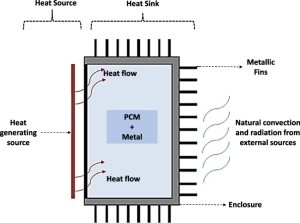
For this reason, the design of a circuit card assembly should prioritize heat dissipation during the PCB layout phase. Using tools like thermal simulation, thermal modeling, and current flow analysis will help identify hotspots and ensure that the electrical components are adequately cooled. This means ensuring that copper trace thickness and width are adequate for the desired current density and that they are routed away from components with high temperature sensitivities, such as sensors and Op-amps.
How Are Thermal Management Concerns Addressed During Circuit Card Assembly?
In addition to minimizing heat generation, proper geometrical arrangement of circuit elements is essential for thermal stability. This is because the physical separation between components prevents heat from concentrating in specific areas of the PCB, where it can cause damage. Additionally, routing high-current traces away from sensitive components enables them to disperse their heat more evenly.
Finally, the use of thermal interface materials and fans can increase the efficiency of heat dissipation. This is because these materials improve the thermal contact between the component and the metal surface it sits on, as well as the flow of air over the component, allowing it to cool more effectively.
As the power density of electronic hardware continues to increase, the need for improved thermal solutions will become increasingly urgent. For this reason, a new workflow between structural finite element analysis software (FEA), such as Ansys Mechanical, and computational fluid dynamics (CFD) software, such as Ansys Icepak, will be necessary to accurately predict junction and case temperatures throughout the printed circuit board assembly (PCBA).
By combining these two advanced simulation technologies, engineers can quickly determine the optimum cooling solution to protect their electronics from dangerous overheating. This will be especially important for the next generation of mobile devices, which will incorporate faster processors, more powerful batteries, and higher-speed wireless data communications. As a result, these systems will generate more excess heat and need to be adequately cooled in order to maintain signal integrity. The use of an ad-hoc, trial-and-error approach to thermal management in the development of these types of products is no longer viable.