

What role do flexible circuit board play
In the dynamic landscape of healthcare technology, flexible circuit boards have emerged as indispensable components in the development of advanced medical devices. These innovative substrates, renowned for their adaptability, reliability, and miniaturization capabilities, play a vital role in enhancing patient care, improving diagnostic accuracy, and enabling groundbreaking medical innovations. Let’s explore the multifaceted contributions of flexible circuit boards in the realm of medical devices.
Flexibility is paramount in medical device design, especially when it comes to wearable and implantable devices intended to conform to the body’s contours and movements. Flexible circuit boards, with their ability to bend, twist, and flex without compromising functionality, enable the creation of lightweight and ergonomic devices that provide optimal comfort and functionality for patients. From smart patches and biosensors to implantable monitoring devices and neural interfaces, flexible circuits facilitate seamless integration into the human body, enhancing patient compliance and usability.
Miniaturization is another key advantage offered by flexible circuit board in medical device applications. The compact size and high circuit density of flex PCBs enable designers to create ultra-portable and discreet devices that can be worn inconspicuously or implanted with minimal invasiveness. This miniaturization not only improves patient comfort and mobility but also enables remote monitoring, continuous data collection, and real-time feedback, empowering healthcare providers with valuable insights into patient health and well-being.
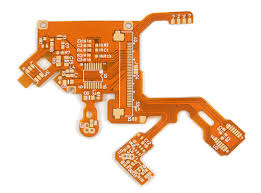
What role do flexible circuit board play in medical devices?
The reliability and durability of flexible circuit boards are crucial considerations in medical device development, where accuracy and consistency are paramount. Flexible circuits, constructed with robust materials and manufacturing techniques, exhibit excellent resistance to mechanical stress, temperature fluctuations, and moisture ingress, ensuring long-term performance and reliability in demanding medical environments. Whether deployed in diagnostic equipment, therapeutic devices, or surgical instruments, flexible circuit boards deliver consistent and precise operation, enhancing the quality and efficacy of patient care.
Rapid advancements in sensor technology and wireless communication have fueled the proliferation of smart medical devices capable of monitoring vital signs, tracking medication adherence, and delivering personalized treatment regimens. Flexible circuit boards serve as the backbone of these interconnected systems, facilitating seamless integration of sensors, microcontrollers, and wireless modules into compact and versatile platforms. From wearable fitness trackers and smart inhalers to remote patient monitoring systems and telemedicine devices, flexible circuits enable real-time data acquisition, analysis, and communication, revolutionizing healthcare delivery and patient outcomes.
The versatility of flexible circuit boards extends beyond traditional medical devices to encompass emerging applications in bioelectronics, regenerative medicine, and neural interfacing. Flexible circuits facilitate the development of bioelectronic implants that interface with the nervous system, enabling precise control of prosthetic limbs, restoration of sensory feedback, and treatment of neurological disorders. Moreover, flexible electrodes and bio-compatible materials enable the creation of implantable devices for drug delivery, tissue regeneration, and neural modulation, opening new frontiers in personalized medicine and regenerative therapies.
In conclusion, flexible circuit boards play a pivotal role in driving innovation and advancement in medical device technology, enabling the development of wearable, implantable, and smart devices that revolutionize patient care and healthcare delivery. From enhancing comfort and usability to enabling real-time monitoring and personalized treatment, flexible circuits empower healthcare providers with tools and technologies to improve patient outcomes and quality of life. As the healthcare industry continues to embrace digital transformation and personalized medicine, flexible circuit boards will remain at the forefront of medical device innovation, shaping the future of healthcare for generations to come.